What Are Agentic AI Systems? A Simple Guide for Business Owners
Allegiant IT
January 27, 2026
3 min read
From Buzzword to Business Value: Why Agentic AI Matters Now
If you are a founder or manager, you’ve probably started hearing about agentic AI, agentic AI systems, and AI agents for business. It can sound like just another buzzword on top of generative AI, but the real idea is simple: agentic AI is about getting AI to actually do work in your business, not just give suggestions or generate content.
This guide explains what agentic AI means in plain language, how it differs from normal automation and chatbots, and how you can start using it in places like Visakhapatnam and Madhurawada.
What Is Agentic AI?
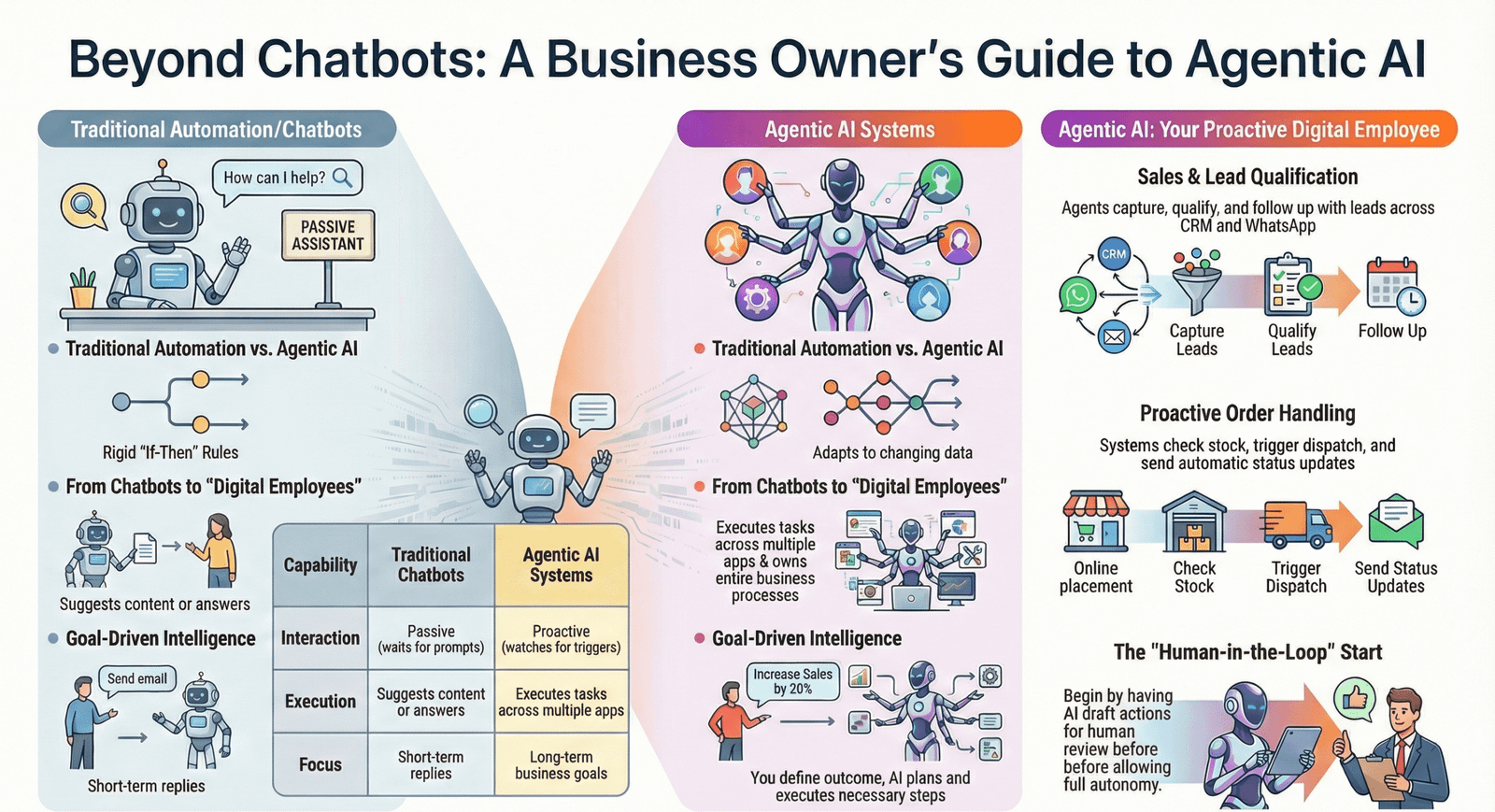
Agentic AI refers to AI systems that can plan, decide, and act toward a goal with limited supervision.[web:15][web:106] Instead of acting like a passive chatbot that only answers when you type a prompt, an AI agent can:
Understand a business goal, such as “follow up with every new lead within 10 minutes
Break that goal into smaller tasks.
Use tools like your CRM, email, WhatsApp, ERP, or spreadsheets.
Execute tasks and adjust when data or conditions change.
Agentic AI systems are one or more AI agents connected to your apps and data, running workflows end to end—like a junior team member that owns a process, not just a chatbot that answers questions.
How Is Agentic AI Different?
Traditional automation and RPA: fixed rules (send email, send invoice, move data), useful but rigid and not goal-aware.
Generative AI and chatbots: wait for prompts, reply once, don’t own business outcomes.
Agentic AI / goal-driven AI:autonomous AI agents watch for triggers (leads, orders, tickets), choose next actions, and drive AI workflow automation across tools.
Where Do AI Agents for Business Help?
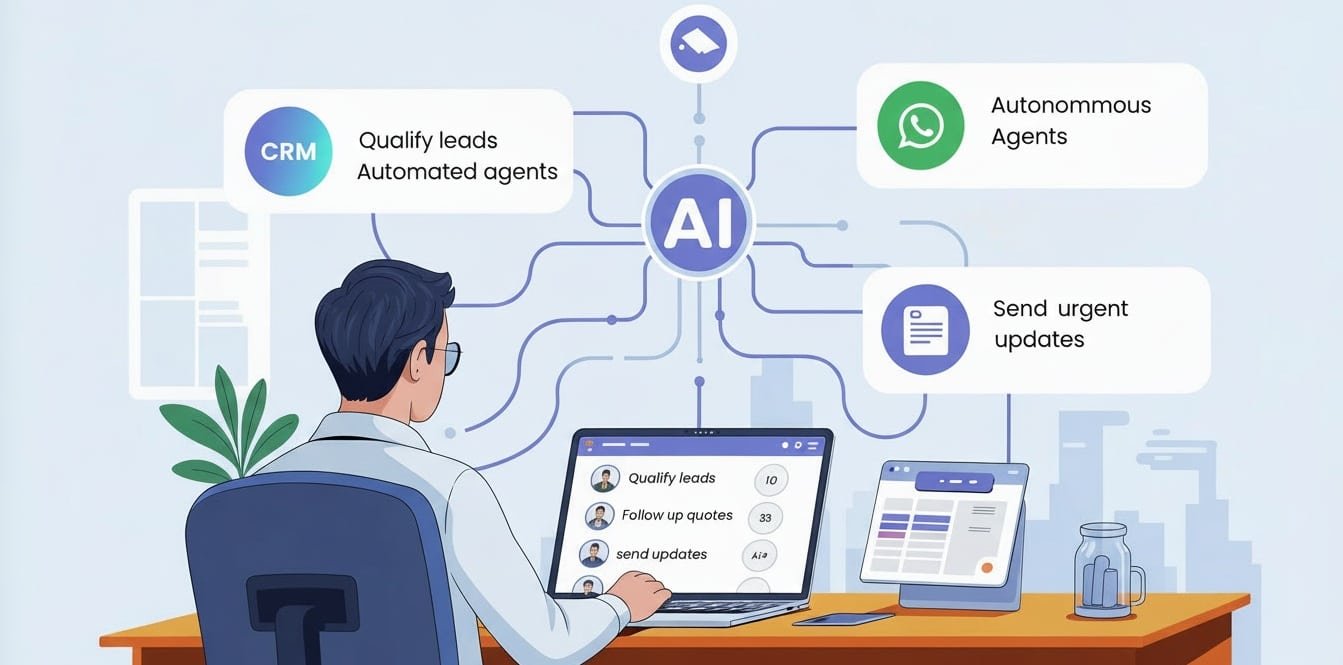
AI agents for business are most useful in three everyday areas. In sales and marketing, they capture and qualify leads, update your CRM, send timely follow-ups, and remind reps to act. In operations, they track dealer and distributor orders, check stock, trigger dispatch, and send status updates automatically. In support, they answer common questions, collect missing details, escalate tougher cases to humans, and send feedback links after resolution, acting like a digital coordinator across your workflows.
Agentic AI for Growing Businesses
Agentic AI systems can plug into everyday workflows like handling enquiries, managing dealer orders and payments, or automating bookings and reminders, so your staff can focus on higher‑value, in‑person customer work.
When and How to Start
Use agentic AI when you have repetitive workflows, clear goals, and work spread across CRM, billing, WhatsApp, email, and sheets.
Start small: pick one workflow, define a goal and guardrails, connect only needed tools, and begin with human-in-the-loop before full automation.
Done well, you get practical value from agentic AI, AI agents for business, autonomous AI agents, and AI workflow automation without overwhelming your team.


 Back to Blog